




Whether it’s a thick-walled farmhouse, an elegant country house surrounded by gardens, or an old sheepfold nestled in the heart of nature, these properties all embody a certain way of life in the south of France. Yet they do not share the same origins, the same architectural style, or the same qualities for a vacation.
The key difference lies in their original purpose: the mas was a farm, the bastide was a country residence associated with an estate, while the bergerie was intended to house livestock.
Today, these buildings have often been converted into luxury residences. However, their commercial names alone are not enough to identify them: their history, location, and architectural layout remain the most reliable clues.
Mas, Bastide, and Sheepfold: A Comparison at a Glance
| Property Type | Original function | Distinctive Architecture | Traditional Environment | Ideal for |
|---|---|---|---|---|
| Provençal farmhouse | Farm and residence | Elongated shape, thick walls, openings that are often smaller on the north side | Farmland, olive groves, vineyards, or orchards | A Family Getaway, Authenticity, and Indoor-Outdoor Living |
| Provençal country house | An aristocratic or bourgeois country residence, part of an estate | A more regular floor plan, a well-organized facade, and numerous openings | Ornamental garden, park, fountain, walkway, or patio | Receptions, classic elegance, and spacious living rooms |
| Sheepfold | Sheep Shelter and Forage Storage | A simple, often elongated building with vaults or open spaces | Countryside, plateau, hill, or pastoral area | Privacy, nature, and a rocky atmosphere |
These characteristics are guidelines, not absolute rules. The buildings may have been expanded, joined together, or radically altered over the centuries.
What is a Provençal farmhouse?
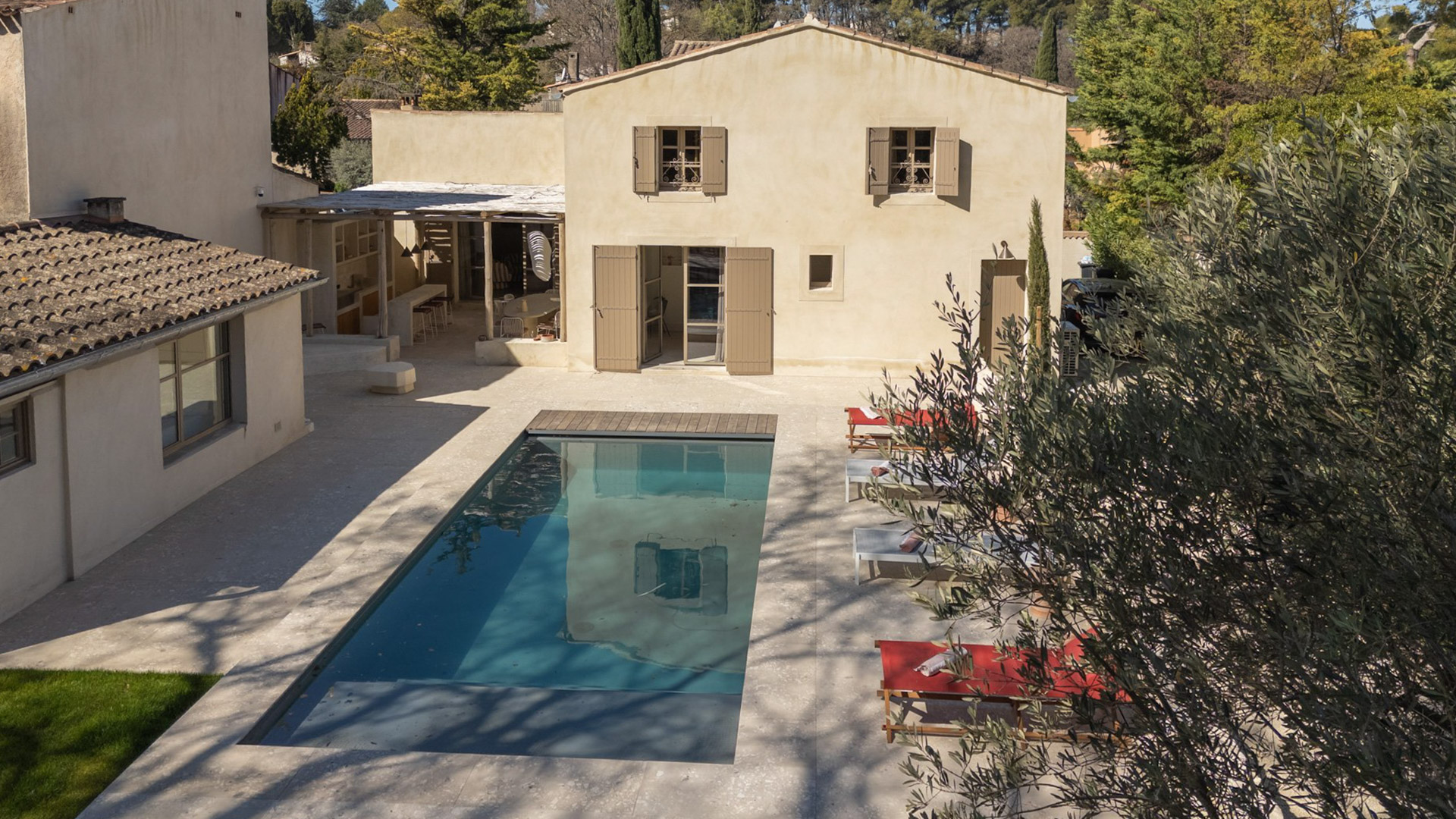
Originally, a “mas” was not just a house: it referred to an agricultural complex comprising the dwelling, the farm buildings, and the surrounding land.
The farmhouse was generally located at the heart of the cultivated estate. Its shape therefore depended more on the needs of the farm and climatic constraints than on a desire for symmetry. Outbuildings might have been added over the generations, which explains the sometimes irregular or elongated shapes of certain complexes.
Some of the features commonly associated with a Provençal farmhouse include:
- a location in the interior;
- a main facade that is typically oriented toward the south;
- fewer openings on the sides exposed to cold winds;
- thick walls that provide good thermal inertia;
- agricultural outbuildings, sheds, barns, or former storage spaces;
- a functional architecture that is gradually being enhanced.
The Bouches-du-Rhône Council for Architecture, Urban Planning, and the Environment notes that the mas is traditionally located at the heart of the farm, with an orientation and vegetation cover suited to the climate.
Why choose a farmhouse for your vacation?
The farmhouse is particularly well-suited for travelers looking for a warm, spacious property that’s easy to share. Its living areas, historic outbuildings, and outdoor spaces are ideal for stays with family or friends.
Today, a renovated mas can combine the charm of the past with modern amenities: a swimming pool, an outdoor kitchen, en-suite bedrooms, air conditioning, or a pétanque court. However, the quality of your stay depends more on the quality of the renovation and the actual amenities than on the label “mas” alone.
What is a Provençal bastide?
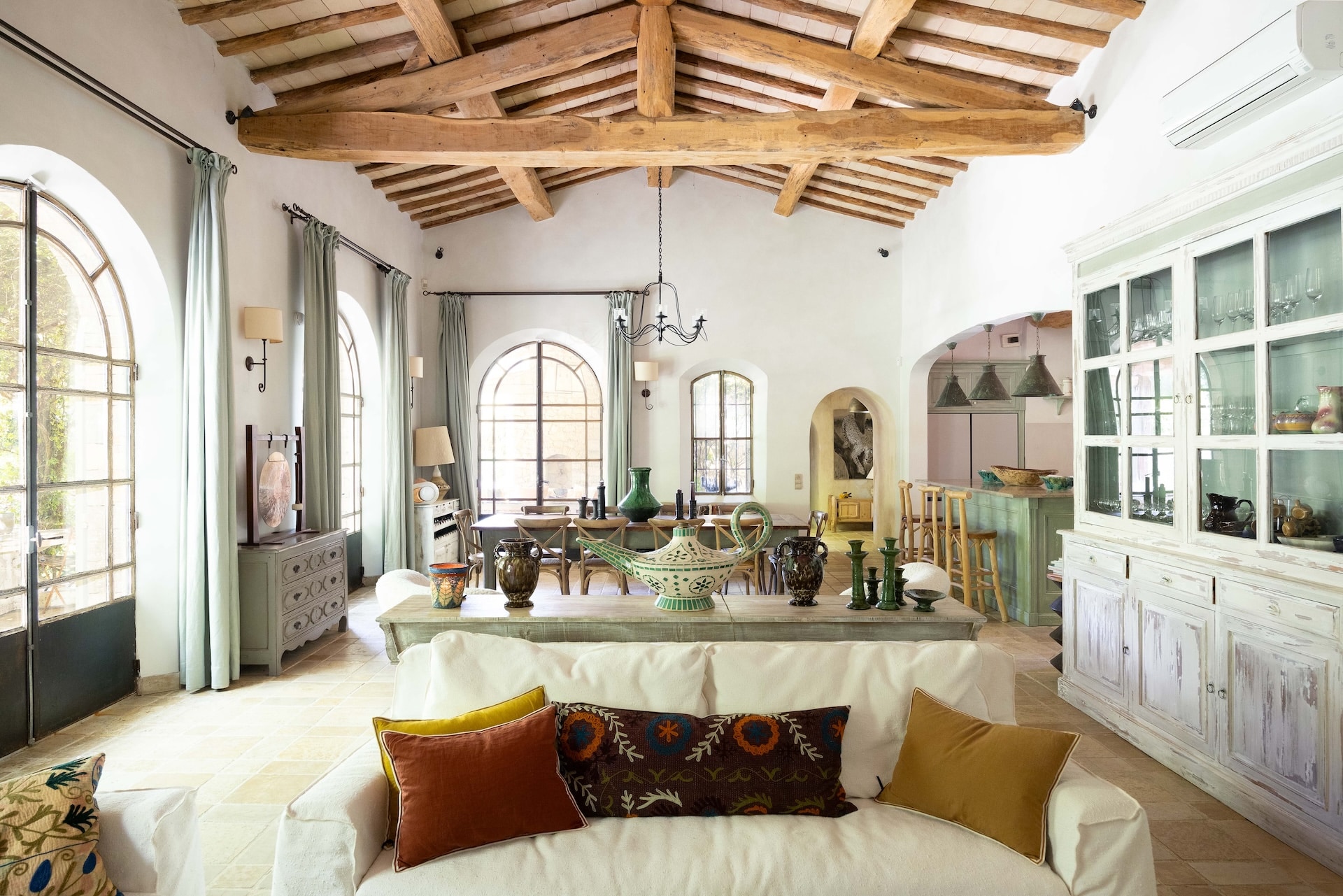
Historically, a Provençal bastide was a country residence belonging to an aristocratic or bourgeois family. It was generally associated with a farm, but it also served as a place for entertaining and vacationing.
According to the CAUE of Bouches-du-Rhône, bastides began to develop in Provence in the 16th century and became increasingly common between the 17th and 19th centuries. At that time, these estates combined a residence, farmland, and ornamental gardens.
A bastide is often characterized by:
- a prominent or slightly elevated location;
- a layout that is more compact and regular than that of the farmhouse;
- a symmetrically designed facade;
- aligned openings;
- traditional plaster rather than stone that is necessarily left exposed;
- a distinctive entrance and decorative elements;
- a formal garden, sometimes featuring fountains, ponds, or topiary.
Exposed stone, therefore, is not a sufficient criterion for identifying an authentic Provençal home. Many old buildings were protected by a lime plaster suitable for the masonry and the climate.
Why choose a bastide?
A bastide is often well-suited for stays that emphasize elegance, large reception rooms, and landscaped gardens. Its more orderly architecture creates the impression of a classic residence, a feeling sometimes enhanced by a driveway, a gate, a courtyard, or a wooded park.
It may be suitable for a family gathering, a special event approved by the owner, or a vacation where the common areas are just as important as the bedrooms. However, you should check the occupancy rules and event permits before making a reservation.
What is a sheepfold?
The sheepfold was, first and foremost, a livestock building. It was used to house sheep, ewes, and lambs, while fodder could be stored in an upper section or a hayloft.
In the Verdon region, the pastoral heritage includes both sheepfolds integrated into farms and freestanding structures accompanied by dry-stone enclosures. Some featured vaulted ceilings that provided good thermal inertia. Summer sheepfolds might also include seasonal housing for the shepherd and a cistern for collecting rainwater.
A former sheepfold can often be recognized by:
- a simple, elongated design;
- an initially limited number of openings;
- large spaces that were once used to house animals;
- stone walls and, in some cases, vaults;
- a rural or pastoral setting;
- a more secluded location than that of a village house.
Why choose a renovated sheep barn?
The sheep barn charms with its rustic character, its tranquility, and its direct connection to the landscape. A successful renovation can transform its original spaces into spectacular areas, while preserving the stone, beams, and arches.
It is particularly well-suited for travelers seeking tranquility, privacy, and an experience close to nature. On the other hand, its remote location may make a car essential and extend travel times to shops, beaches, or villages.
How can you tell a real mas, a bastide, or a sheepfold apart?
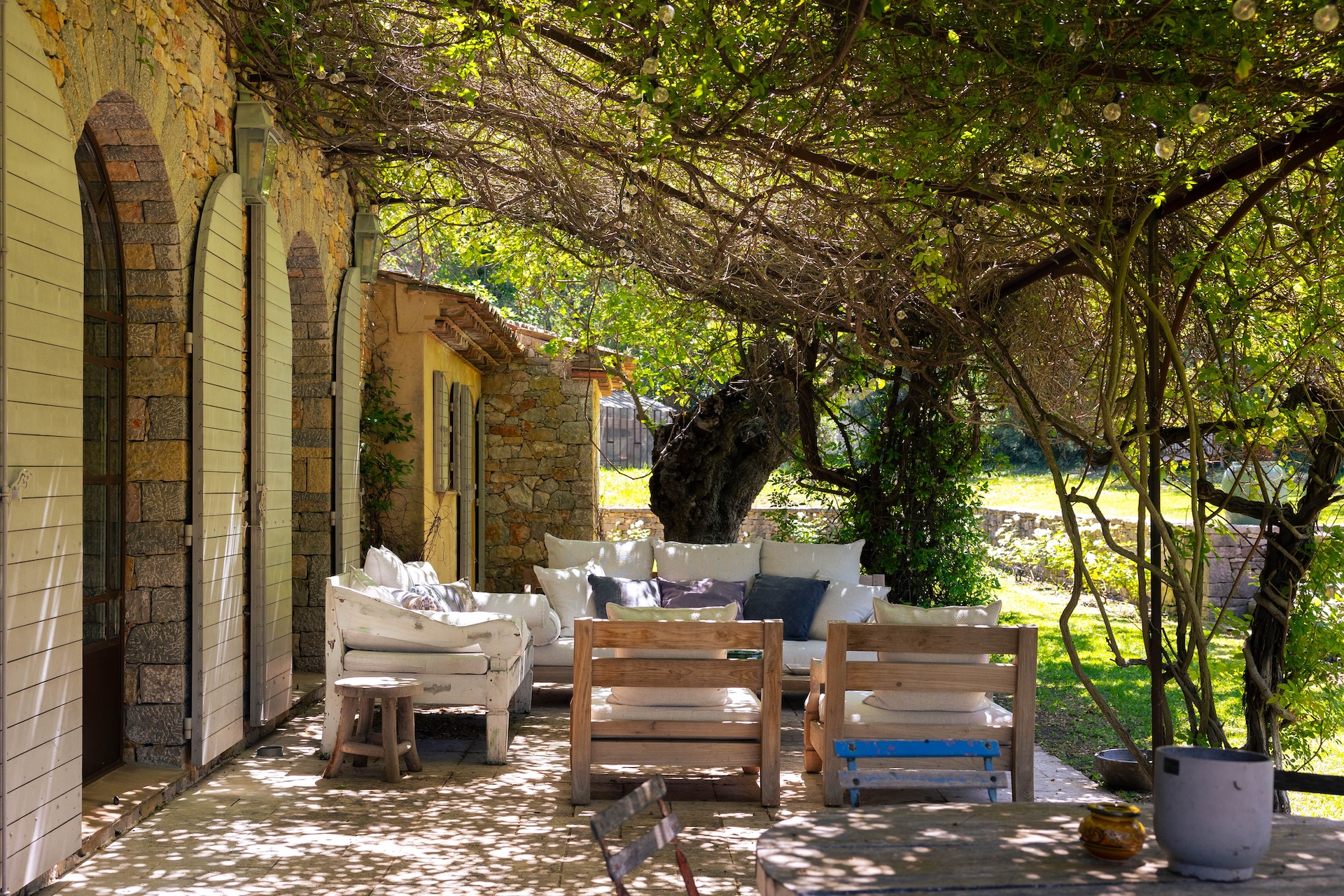
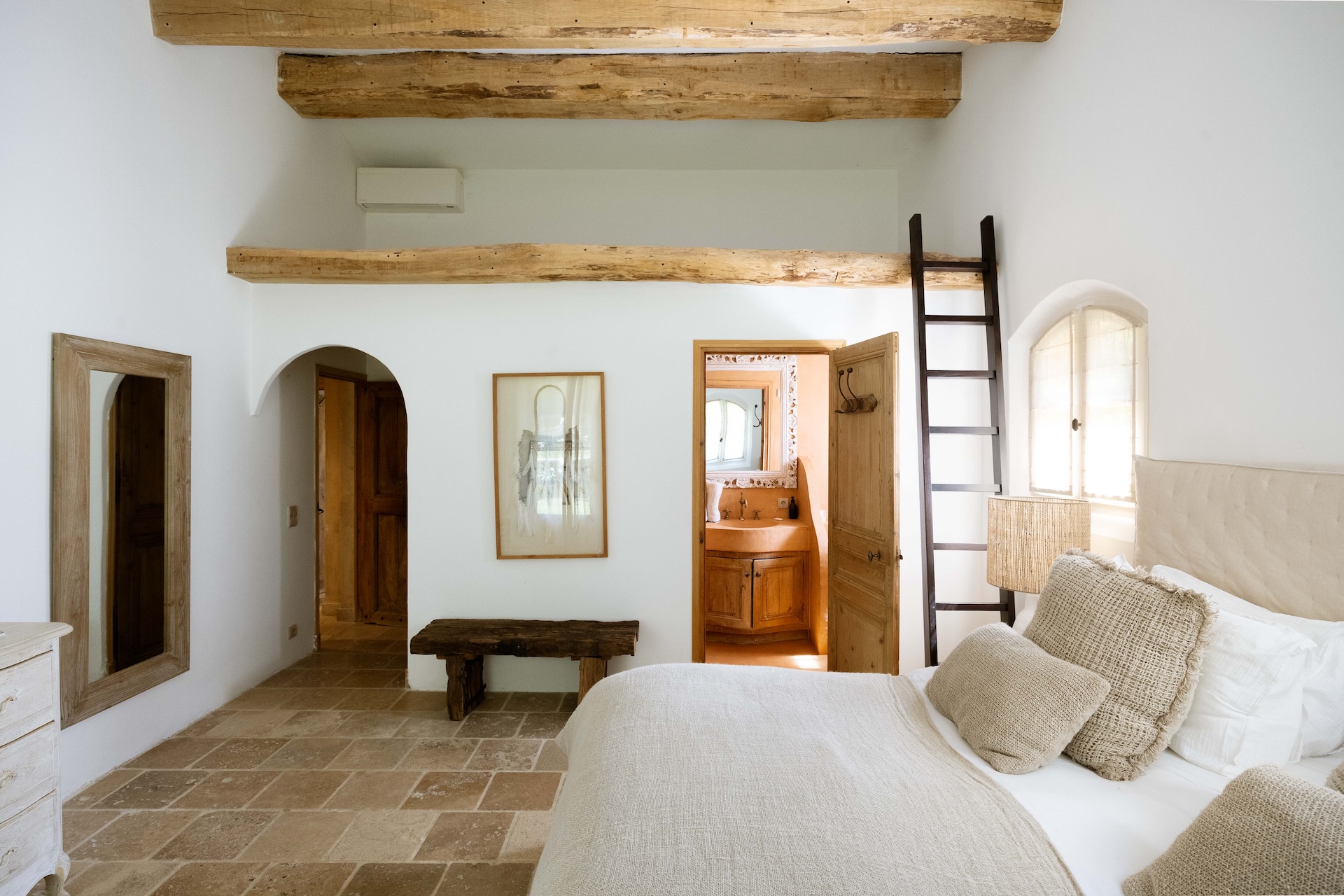
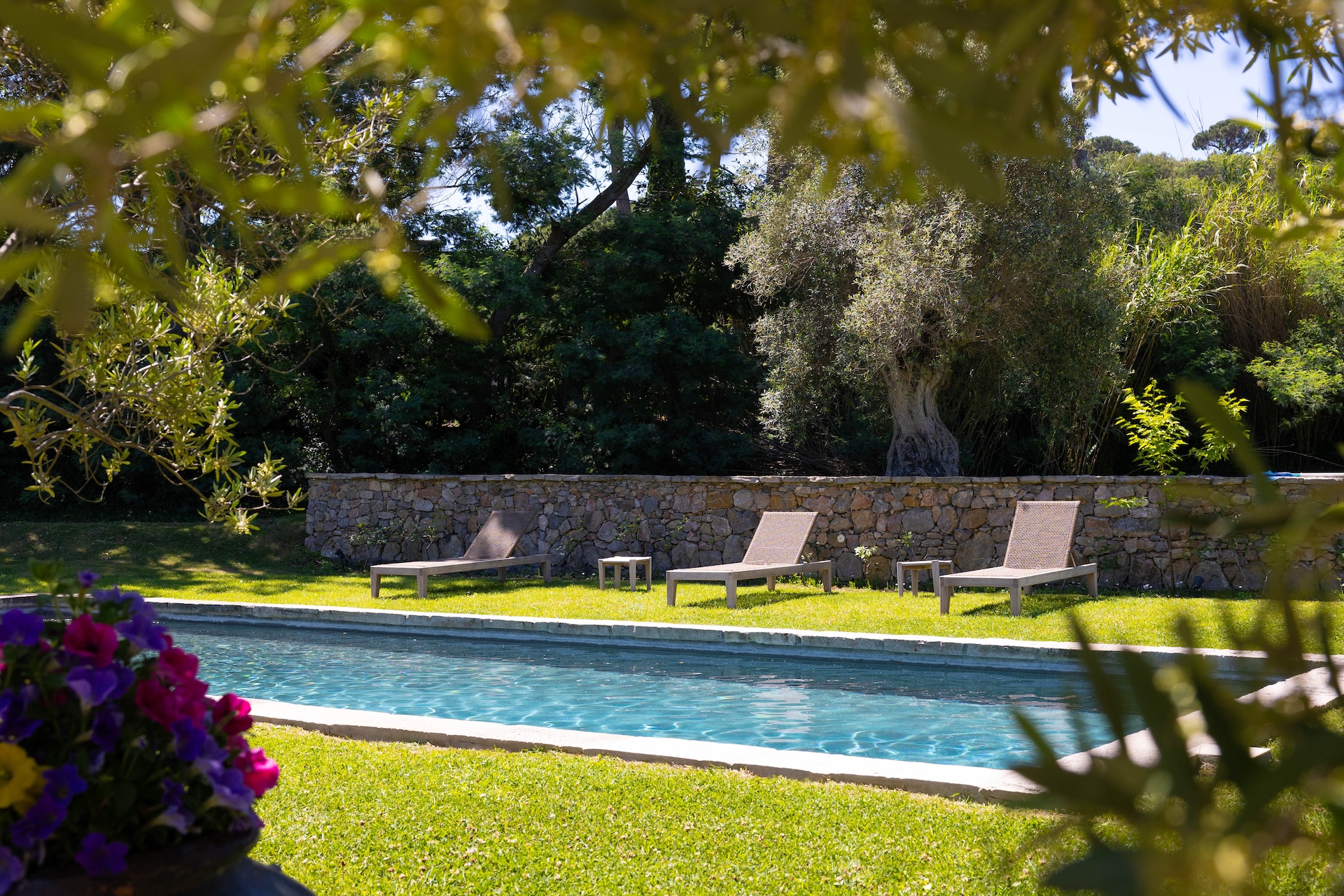
The terms used in real estate or tourism listings can be vague. To determine the nature of a building, you need to consider several clues.
1. Explore its historical role
Ask what the building was originally used for: a farm, a country home, or a livestock barn. A documented history provides more information than a simple sales description.
2. Observe the layout
A mas is traditionally located in the heart of farmland. A bastide may occupy a more prominent position and have a more formal relationship with its garden. A sheepfold is often associated with a former pasture.
3. Examine the design of the facades
A regular, well-proportioned, and largely open facade is more reminiscent of a bastide. The successive alterations and functional spaces are more characteristic of a mas. The openings in a sheepfold may have been created recently during its conversion into a residence.
4. Examine the dependencies
Barns, sheds, stables, dovecotes, haylofts, or pens provide valuable insights into the estate’s past activities. They can also become useful spaces for travelers, provided they have been converted in accordance with the necessary permits.
5. Don’t rely solely on exposed stone
Exposed stone is highly sought after today, but it does not prove either the age of the building or its architectural style. Some walls were historically plastered, while contemporary buildings may incorporate elements of Provençal architecture.
A farmhouse, a country house, or a sheep farm: Which type of property should you choose for your vacation?
The best choice depends less on the supposed prestige of the destination than on your travel style.
Choose a farmhouse if you’re looking for…
- a home where multiple generations can live together comfortably;
- large outdoor spaces;
- an authentic Provençal atmosphere;
- proximity to vineyards, olive groves, or villages;
- annexes and recreational areas.
Choose a country house if you prefer…
- classic and elegant architecture;
- beautiful views of the garden;
- large reception rooms;
- a home suitable for a formal gathering or a large family reunion;
- a well-designed park and elegant outdoor spaces.
Choose a sheepfold if you want to…
- get away from the hustle and bustle;
- enjoy an unspoiled natural landscape;
- stay in a more secluded place;
- restore the stonework, the vaults, and the unique spatial configurations;
- prioritize the experience of the place over the immediate proximity of services.
Essential Checks to Make Before Booking
Regardless of the type of property, check specific criteria before making a decision:
- the exact location and the actual time it takes to get to the stores;
- the presence of air conditioning or a cooling system;
- the number of rooms with a full bathroom;
- making the pool safe for children;
- the accessibility of the rooms and the presence of stairs;
- the quality of the Internet connection;
- the proximity of neighbors and the level of privacy;
- services included in the rate;
- the rules regarding pets, guests, and events;
- the officially announced capacity.
When staying in an older building, it’s also a good idea to ask whether certain rooms are located in an annex, whether the thick walls interfere with Wi-Fi or cell service, and whether the access road is suitable for all types of vehicles.
The same name can hide very different experiences
Two country houses can offer completely different types of stays: one located near a village and designed for family life, the other secluded in the middle of a vast estate. Similarly, a restored sheepfold can be transformed into a very open, contemporary home, while a bastide may have retained an older, more compartmentalized floor plan.
The architectural style tells the story of the place. When choosing a vacation rental, you should then consider the layout, amenities, services, surroundings, and terms of stay.
Prestige Villa Rental selects distinctive properties based on these specific criteria. On PrestigeVillaRental.com, travelers can search for a villa that meets their priorities: a family vacation, privacy, proximity to the sea, a natural setting, or the Provençal lifestyle.
Frequently asked questions
What is the main difference between a mas and a bastide?
A mas originated as a farmstead and is traditionally laid out to meet its functional needs. A bastide is a more stately country residence, generally associated with a wealthy family, an estate, and an ornamental garden.
Are all mas always built of stone?
No. Its masonry may be made of stone, but it was sometimes covered with a protective coating. Therefore, exposed stone alone is not enough to identify a mas.
Is a bastide necessarily a luxury property?
Not necessarily. The term primarily refers to the building’s origin and architectural style. Its current level of luxury depends on the building’s condition, whether it has been renovated, its location, and its amenities.
Can an old sheep barn be turned into a comfortable home?
Yes, provided it has undergone a high-quality renovation. In particular, you should examine the insulation, natural light, ventilation, room layout, and whether any modifications comply with building codes.
What kind of home should a large family choose?
A country house is often particularly well-suited thanks to its spacious interiors, outbuildings, and outdoor areas. A large country estate can also be suitable if it has enough bedrooms and bathrooms.
Which home offers the most privacy?
An isolated sheepfold or a farmhouse on a large estate can offer a great deal of privacy. However, this depends on the actual location, the neighborhood, and the layout of the property—not just on the type of building.
Are the terms “mas,” “bastide,” and “bergerie” always accurate in real estate listings?
No. These terms may be used freely for descriptive or commercial purposes. To learn the true history of a property, one must examine its location, floor plans, materials, outbuildings, and, when possible, its historical records.
Key Takeaways
The farmhouse tells the story of working the land, the country house reflects the vacation lifestyle of a wealthy family, and the sheepfold illustrates the region’s pastoral history. These origins continue to influence their architecture and the experience they offer.
When planning your vacation, however, choose a property based on what it actually offers today: location, comfort, privacy, amenities, services, and how well it suits your travel style.
Heritage sources consulted: CAUE of Bouches-du-Rhône – Mas and Bastide: What’s the Difference? and Verdon Regional Nature Park – Architecture and Traditional Building Techniques.


