




Renting out your villa for short-term stays is no longer something you can do on a whim. Since the enactment of Law No. 2024-1039 of November 19, 2024—known as the “Le Meur Law”— the regulatory framework for short-term rentals has been radically overhauled throughout France: mandatory national registration, legally enforceable energy performance certificates, stricter tax rules, and enhanced inspections. Whether it’s located on the French Riviera, at the foot of the Alps, on the Atlantic coast, or in Provence, a high-end villa offered for rent is now subject to the same set of requirements. For the owner, the challenge is no longer just finding good tenants: it is ensuring legal compliance for a business that, if poorly managed, exposes the owner to fines of up to tens of thousands of euros. This guide provides a step-by-step overview of the requirements you need to know before the next season, regardless of where your property is located in France.
Who is affected by this regulation?
When a villa, farmhouse, chalet, or country house is offered for rent for short stays, furnished and offered for a fee to transient guests, it is legally considered a “tourist rental” within the meaning of Article L. 324-1-1 of the Tourism Code. It does not matter whether the rental is arranged through an agency, a concierge service, a platform such as Airbnb or Booking, or directly through word of mouth: the legal requirements are the same throughout the country. The only difference is the level of enforcement, which is stricter in major cities and in so-called “high-demand” areas—including the Mediterranean coast, the Alps, the Atlantic coast, and certain regional metropolitan areas.
1. Mandatory registration and the 13-digit number
This is the most far-reaching measure of the reform, and it applies uniformly throughout France. All furnished vacation rentals—whether they are primary or secondary residences—must be registered through a single national online service by May 20, 2026, at the latest. This registration generates a 13-digit declaration number, which must appear on every published listing, regardless of the platform used. After this deadline, platforms are legally required to remove any listing that does not include this number, regardless of the property’s location.
Pending the full rollout of this national online service, each tourist municipality already has its own registration portal at city hall. It is therefore recommended that you prepare your application right away: proof of identity, proof of ownership, the property’s exact address, whether it is a primary or secondary residence, and a valid energy performance certificate. Failure to register may result in a civil fine of up to €10,000, which increases to €20,000 in the event of a false declaration.
2. Change of use: a preliminary step in many municipalities
In municipalities with more than 200,000 residents and in many tourist towns classified as “high-demand areas,” converting a residence into a furnished vacation rental requires first obtaining a change-of-use permit from city hall. This list of affected municipalities, established by decree, includes both large urban areas and most seaside and mountain resorts where rental demand is high. Failure to comply with this requirement constitutes an offense subject to severe penalties, with fines that can, in the most serious cases, exceed €50,000.
Another point to watch for in 2026: many municipalities have reduced—or are planning to reduce—the maximum rental period for a primary residence, initially set at 120 days per year, to 90 days. A homeowner who rents out their primary residence should therefore check with their local city hall to confirm the applicable limit before making reservations, as this limit can vary significantly from one municipality to another.
3. The Energy Performance Certificate (EPC) Now Applies to Furnished Vacation Rentals

Until the Le Meur Act, furnished vacation rentals were completely exempt from the mandatory energy performance certification requirements that already applied to long-term rentals. This is no longer the case throughout the country. For any new rental listing subject to a change-of-use permit, the property must have an energy efficiency rating between A and E: properties rated F or G may no longer be offered for rent in the affected areas, unless an exemption applies.
A phased timeline applies to properties already rented out before November 21, 2024, that are rated F or G: they are granted a grace period, but must achieve a D rating or better by January 1, 2034. For an older stone villa with a pool and outbuildings, this point deserves special attention: it’s better to schedule an energy audit now than to discover, when it’s time to renew your registration, that insulation work or a heating system upgrade has become unavoidable. Good news for some electrically heated properties: the revision of the electricity conversion factor effective January 1, 2026, has allowed tens of thousands of homes to automatically improve their rating without any renovations.
Failure to mention the DPE in a vacation rental listing may result in an administrative fine of up to €1,500 for an individual.
4. Tourist Tax: Collecting, Reporting, and Remitting
The tourist tax is payable by every adult traveler staying in a paid accommodation, with the exception of seasonal workers employed in the municipality. It is established by resolution of each municipality or intermunicipal authority, either based on actual costs or as a flat rate, and rates and schedules therefore vary significantly from one area to another. Certain tourist regions also apply additional departmental or regional taxes, which are automatically added to the municipal rate. Before renting out a property, it is essential to consult your municipality’s online filing portal to determine the exact rate applicable to your property.
When a reservation is made through a major platform such as Airbnb or Booking, the platform generally collects and remits the tax automatically on behalf of the non-professional landlord. However, this does not exempt the owner from their own reporting obligations: many municipalities require periodic online reporting of overnight stays, even when the tax is collected by a platform, and even if there were no rentals at all during the period. This cross-checking of overnight stay reports, registration numbers, and data provided by the platforms is precisely one of the enforcement tools that the Le Meur Act grants to municipalities. Failure to file a report by the deadline can result in a fine ranging from €750 to €12,500, and failure to collect the tax from a liable guest can result in a fine ranging from €750 to €2,500.
5. Taxation of Rental Income
Income from the seasonal rental of a villa is classified as industrial and commercial profits (BIC), not real estate income, regardless of the property’s location in France. Two tax regimes coexist. The micro-BIC regime, which was long considered advantageous, has seen its caps and deductions significantly reduced by the Le Meur Act for income received starting in 2025: an unclassified furnished tourist rental now qualifies for a 30% deduction on annual income up to €15,000, compared to 50% and €77,700 previously. A classified furnished rental property retains a more favorable tax regime, with a 50% deduction up to 77,700 €.
For a high-end villa whose weekly rental income frequently exceeds these limits, the actual-cost method often becomes the most appropriate solution: it allows you to deduct all actual expenses (maintenance, insurance, property management fees, loan interest) and to depreciate the property and its furnishings, thereby reducing the taxable base accordingly. This option is worth discussing with a certified public accountant, particularly when energy-efficiency renovations are planned: under the actual expense method, these renovations are depreciated and can generate a tax loss that can be carried forward for ten years.
It is also important not to confuse the tourist tax—which is merely a payment that passes through the property owner on behalf of the municipality—with taxable rental income: the former is never considered revenue, nor is it a deductible expense.
6. Swimming Pool, Alarm System, Insurance: The Three Pillars of a Homeowner’s Legal Protection
Three issues consistently arise in compliance matters, and they deserve to be addressed with the same rigor as tax obligations, since the consequences of noncompliance are just as severe—if not more so.
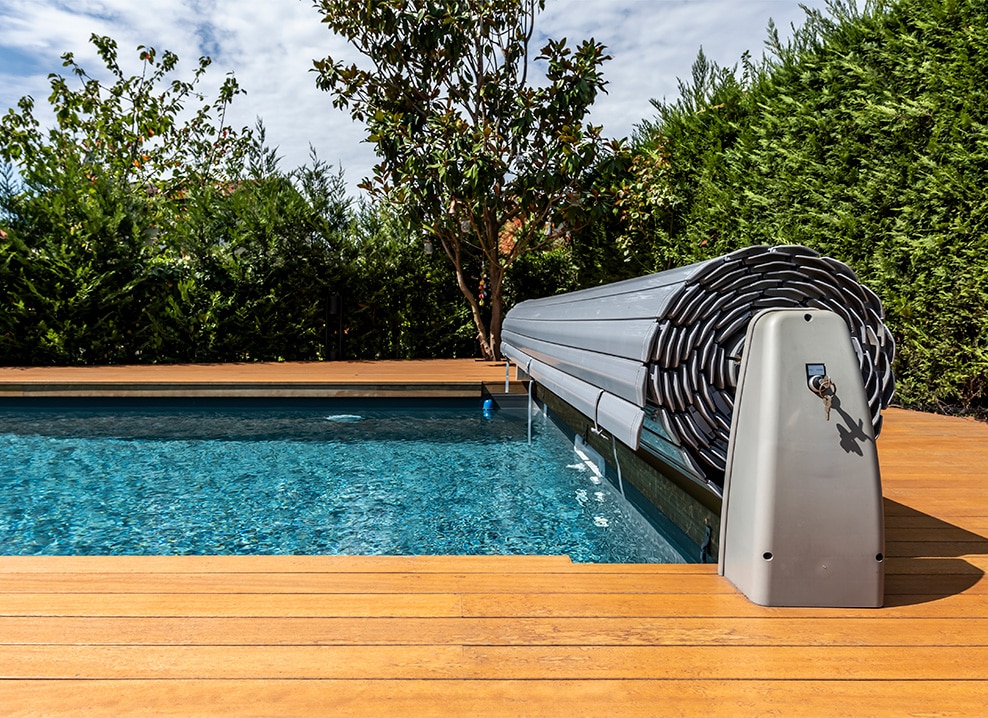
Swimming pool safety is governed by Law No. 2003-9 of January 3, 2003, codified in Articles L. 128-1 et seq. of the French Building and Housing Code. All in-ground or semi-in-ground swimming pools, whether old or new, must be permanently equipped with at least one of the following four standardized safety devices: a barrier compliant with standard NF P90-306, an alarm compliant with standard NF P90-307, a cover compliant with standard NF P90-308, or an enclosure compliant with standard NF P90-309. A simple bubble cover or a garden gate that cannot be locked does not satisfy this requirement. The issue goes far beyond mere administrative compliance: drowning remains the leading cause of accidental death among children under six in France, and the absence of a standardized safety device exposes the owner to a fine of up to €45,000, regardless of their civil and criminal liability in the event of an accident. For a vacation rental, this issue is all the more critical since the owner is hosting families who are visiting the property for the first time, often without knowing the specifics of the pool.
The home’s alarm and security systems (mandatory smoke detectors, burglar alarm, security safes) are part of the same approach to responsibility: beyond the minimum legal requirements, they protect both the occupants and the property itself, and provide reassurance to a high-end clientele that is increasingly attentive to these criteria when making reservations.
Insurance is the third pillar—and likely the most frequently overlooked one: a standard home insurance policy for a second home often excludes commercial rental use, which can completely deprive the owner of any compensation in the event of a loss occurring during a rental stay. Choosing the right policy (comprehensive home insurance tailored to seasonal rentals, vacation home insurance, liability coverage for non-occupant owners, legal protection) depends on numerous factors specific to each property and management approach. Since this topic is broad enough to warrant its own discussion, we’ve covered it in detail in a dedicated article: “What Insurance Do You Need for Your Vacation Rental?”, which you should review before renting out your property.
7. Documents to Prepare When Signing a Power of Attorney with an Agency
Entrusting your villa to a vacation rental agency requires putting together a complete set of administrative documents in advance. A reputable agency will not be able to post a listing or secure your reservations without the following documents:
- Proof of ownership of the property (title deed, or, if unavailable, a property tax bill) and, if applicable, the consent of the co-owner or the joint owners;
- A valid form of identification for the owner(s), or a Kbis extract for a property owned through a company (such as an SCI);
- The registration number for the vacation rental issued by the city hall or the national online service, or, failing that, the information needed for the agency to complete this process on your behalf;
- Authorization for a change of use, when required by the municipality;
- A valid energy performance certificate, as well as other technical reports for the dwelling (electricity, gas, and sewage systems, if applicable);
- A certificate or proof of the pool’s safety features, if applicable;
- An insurance certificate that explicitly states coverage for the short-term rental business;
- Bank account information, for the transfer of rent collected;
- An inventory of furniture and equipment, useful both for the lease agreement and for enhancing the appeal of the listing.
Gathering these documents in advance of your first meeting with the agency can save several weeks before the property is actually listed online—a crucial factor when the goal is to be visible as soon as the peak season begins.
8. The steps, in order, for renting out your villa with complete peace of mind
For a homeowner who is just learning about all of these obligations, here is the logical order in which to address them:
- Check local regulations with city hall: whether the area is designated as a high-demand area, whether a change-of-use permit is required, and whether there is a limit on the number of days the property can be used as a primary residence.
- Have the Energy Performance Certificate (DPE) prepared or updated, and, if necessary, begin considering the energy-efficiency renovation work that needs to be planned before 2034.
- Ensure that safety equipment, particularly the pool safety system, complies with regulations, and gather the relevant documentation.
- Check or purchase insurance that is appropriate for the commercial rental use of the property.
- Register at city hall or through the national online service to obtain the 13-digit number.
- Create an account on the tourist tax portal of the relevant municipality so that you can collect, report, and remit the tax starting with your first reservation.
- Choose the appropriate tax regime (micro-BIC or actual income regime) with the help of a certified public accountant, based on the expected rental income.
- If the property is listed with an agency, compile the complete administrative file by gathering all the documents listed above.
- Post the listing, making sure to include the registration number and the energy performance certificate (DPE), or you may face deactivation or a fine.
If followed in this order, these steps will prevent unnecessary back-and-forth between government agencies and allow you to start the season without any legal uncertainties.
What Awaits Property Owners Who Fail to Comply
When added together, these penalties can quickly become substantial: failure to obtain authorization for a change of use, lack of registration, a missing energy performance certificate (DPE), and exceeding the maximum number of days can—in the most severe cases already ruled on by certain courts—amount to tens of thousands of euros in total. Beyond the fine, a listing without a valid registration number is now simply deactivated by the platforms, which effectively means losing all commercial visibility for the property during peak season.
Seek guidance rather than go it alone

Between the national registration portal, local regulations, the energy performance certificate (DPE) timeline, the tourist tax rates specific to each region, and choosing the right tax regime, bringing a high-end villa into compliance requires time and constant monitoring of regulatory changes. This is precisely one of the services that a specialized agency like PrestigeVillaRental.com can handle on behalf of its partner owners: preparing the registration application, tracking tourist tax filings, connecting owners with inspectors and certified public accountants, and managing day-to-day reservations in full compliance with regulations.
Frequently asked questions
Do I need to register my villa even if I only rent it out for a few weeks a year?
Yes. The registration requirement applies as soon as the property is first rented out, whether it is rented for two weeks or for the entire season, whether it is a primary or secondary residence, and regardless of its location in France.
What happens if my energy performance certificate has an F or G rating?
For a property being rented out for the first time following a change in use, an energy performance certificate (DPE) rated F or G generally prevents authorization in high-demand areas. For properties already rented out prior to November 21, 2024, a grace period applies until January 1, 2034, but energy-efficiency renovations are strongly recommended to prepare for the deadline.
Who collects the tourist tax if I rent directly, without using a platform?
It is then up to the property owner to collect the tax from each traveler, report it, and remit it to the municipality, according to a schedule—usually quarterly or monthly—set by each local government.
Are above-ground pools subject to the same safety requirements as in-ground pools?
No. The requirement for a standardized safety device applies to in-ground or semi-in-ground pools. Above-ground, inflatable, or portable pools are not subject to this legal requirement, although it is strongly recommended that the same safety precautions be taken for them as well.
Can I continue to rent if I don’t have my registration number by May 20, 2026?
No: Once this deadline has passed, platforms are required to deactivate any listing without a valid phone number. It is therefore advisable to begin the process well in advance of the peak season.


